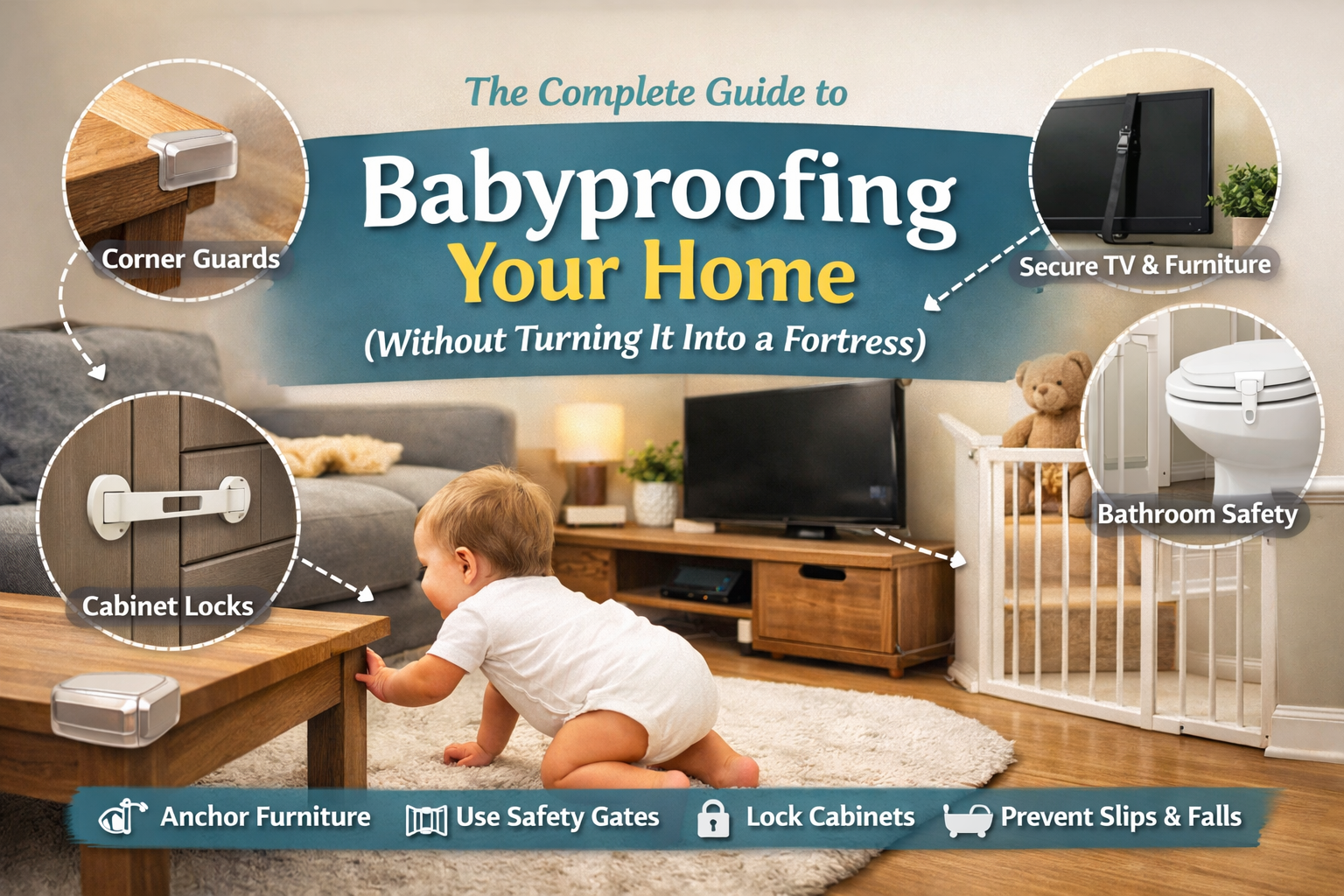
Bringing a baby home changes everything — especially how you see your living space. What once felt safe suddenly looks full of sharp corners, reachable cables, and curious hazards. The good news is that babyproofing doesn’t require turning your home into a padded maze. With the right approach, you can create a safer environment while keeping your home comfortable and functional.
This guide walks you through practical, realistic steps to help you protect your child as they grow from newborn to toddler.
Start With Your Baby’s Point of View
One of the most effective ways to identify risks is to lower yourself to your child’s level. Crawl around your living room, hallway, and kitchen. You’ll quickly notice things that weren’t obvious before — dangling cords, low shelves, unstable furniture, and accessible cabinets.
Babies explore with their hands and mouths. If they can reach it, they’ll likely try to grab it. If they can grab it, they may try to taste it. Keeping that in mind helps you anticipate problems before they happen.
The Living Room: Hidden Hazards in Plain Sight
The living room is often where babies spend most of their time, which makes it a priority for safety adjustments.
Common risks include:
- Sharp table corners
- Unsecured TVs or furniture
- Loose cables and wires
- Decorative items within reach
- Uncovered plug sockets
Simple additions like corner protectors, furniture anchors, and cable organizers can dramatically reduce the chance of injury without changing the look of your space.
Kitchen Safety: The Highest-Risk Area
Kitchens combine heat, sharp objects, and cleaning chemicals — all things that require extra attention once your baby becomes mobile.
Focus on:
- Locking cabinets containing cleaning supplies
- Securing drawers with utensils
- Keeping appliances pushed back from edges
- Using stove guards where possible
- Moving small objects off low counters
It’s also helpful to create a “safe zone” where your child can stay occupied while you cook. This reduces the temptation to explore dangerous areas.
Bathroom Safety Essentials
Bathrooms may be small, but they contain several potential hazards. Slippery floors, water, and medications make this room important to babyproof early.
Consider:
- Toilet locks
- Non-slip bath mats
- Cabinet locks for toiletries and medicine
- Keeping electrical items out of reach
- Always checking water temperature
Never leave a baby unattended in the bath, even for a moment. Most accidents happen quickly and quietly.
Don’t Forget About Furniture Stability
As babies learn to stand, they often pull themselves up using nearby furniture. This can lead to tipping hazards if items aren’t secured.
Anchor:
- Bookcases
- Dressers
- TV stands
- Tall storage units
Even lightweight furniture can become dangerous when a child uses it for support.
Stairs and Doorways
If your home has stairs, installing safety gates becomes essential once your baby starts crawling. Gates help prevent falls and also allow you to control which areas your child can access.
Door stoppers can also protect tiny fingers from getting caught in closing doors — a surprisingly common injury.
Babyproofing That Grows With Your Child
Safety needs change quickly in the first few years. What works for a newborn won’t be enough for a curious toddler. It helps to review your home every few months and adjust as your child becomes more mobile.
Milestone-based safety checks:
- Rolling: clear elevated surfaces
- Crawling: secure cabinets and sockets
- Standing: anchor furniture
- Walking: add gates and corner protection
- Climbing: reassess shelves and reachable items
Babyproofing isn’t a one-time task — it’s an ongoing process.
Keep It Simple and Practical
You don’t need to buy everything at once. Start with the highest-risk areas and build from there. The goal isn’t to remove every possible bump or bruise — it’s to reduce serious hazards while allowing your child to explore safely.
A safer home gives you peace of mind and gives your child the freedom to learn and grow.
Creating a Safer Home Starts Today
Every small change adds up. By identifying risks early and adding simple protections, you create a space where your baby can explore with confidence.
SecureMyBaby is built around this idea — practical safety solutions that make everyday parenting easier, calmer, and safer.